How it’s made
A second brain that reads Alzheimer’s research every week.
AI researchers feed it, it learns from my calls, and it gets a little better each week. The newsletter is one way to read it.
How it started
- FirstA Friday report
An automation sent me a weekly Alzheimer’s research report every Friday. I enjoyed it. But as a Markdown file or a chat thread, it went nowhere. Nothing built up.
- ThenAutoresearch
Andrej Karpathy’s autoresearch lets AI agents run experiments on their own, keep what works and go again. I wondered what that loop would look like pointed at a field I care about.
- NextA second brain
I put the two together in an Obsidian vault. Every find became a linked note, and every call I make teaches the next run. A report I’d read once became something that builds up.
- NowSomething to read and use
Then I turned the second brain into things other people can use: this newsletter, the Research Index and Trial Watch. Each step made the same reading worth more.
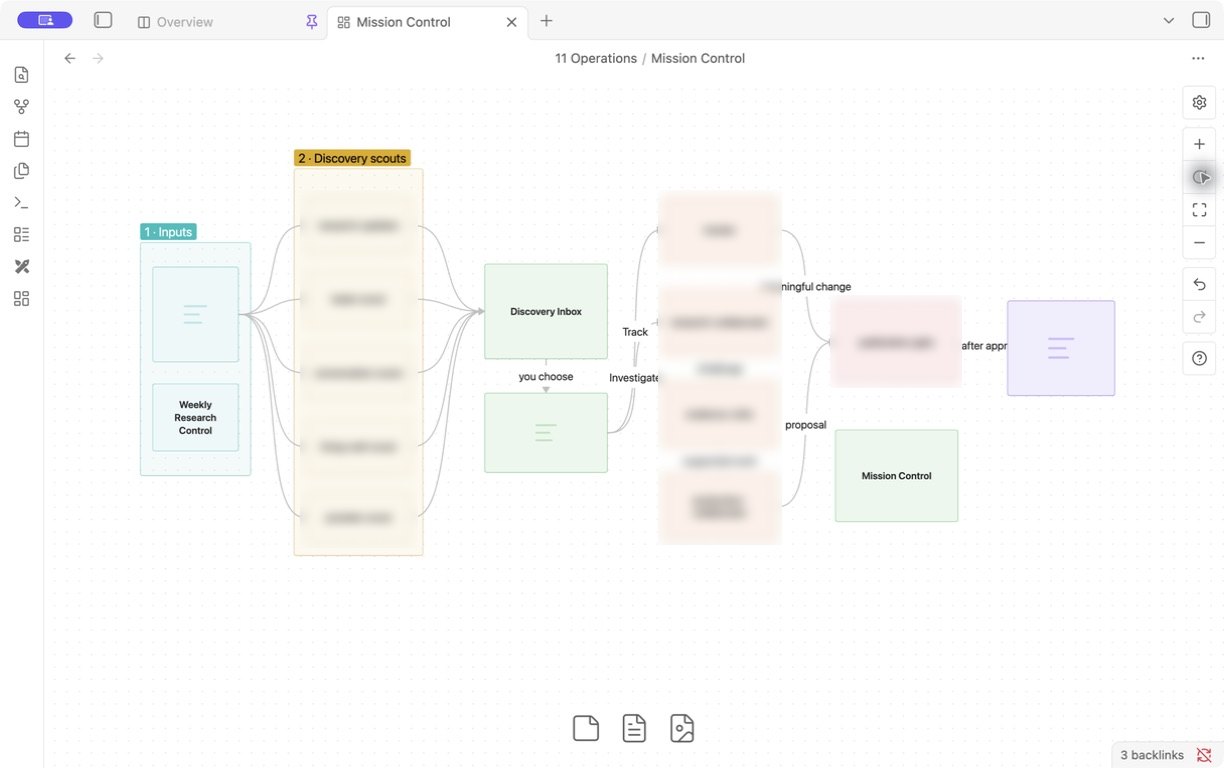
It started messy. Before the Bench existed, I drew the whole system as a map in Obsidian: what comes in, where my calls go, and the gate before anything is published.
What I built
One vault that updates every week, and everything you can read is a window onto it. I designed it and built it with Claude Code.
466 notes and 222 Nodes, linked together and growing each Friday.
- LiveThe newsletterThe month’s best finds, in plain English, on Substack.
- LiveThe Research IndexEvery find we’ve covered, and where it stands now.
- LiveTrial WatchThe trials worth watching, and when each answer is due.
- ComingThe Research Horizon, subjectsNew ways into the same vault.
- ComingReviewsProducts, checked against the evidence.
- MineThe BenchThe editorial system I run it all from. More below.
Inside the vault466 notes · 746 links
- Edition
- Research Index entry
- Review
- Trial Watch
- My working notes
What the Scouts brought back this week
Reads the week’s new papers, trial results and research news.
Follows the trials worth watching: status changes, results due, decisions coming.
Checks what’s spreading online about Alzheimer’s, and the fine print behind it.
The Bench, where I run it
The editorial system I designed and built for this newsletter: AI does the work at every stage, and nothing moves forward until I sign off.
Demos are simplified, with sample text.
Every save is a Git commit
Git is the tool programmers use to track every change to their code: who changed what, when, and the version before. I use it for words. There’s no database behind the Bench. Each edition is one plain text file, and every save becomes a Git commit.
Many hands, one file. Each tool edits the same plain text, and none can quietly overwrite another.
- Draft writtenClaude · 9:02
a1f3c9e - Facts checked, two fixesAn AI desk · 9:40
7d20b41 - Swapped the lead pictureMe, on the Bench · 12:15
c88e1f0 - Approved for SubstackMe · 18:30
4be9a72
A receipt for every change. I can open any edition as it stood at any step, undo anything, and take it all with me if I ever switch tools.
Built as a whole product
Not just a newsletter or a website. I gave it the same thought work I’d give any product: a problem, an audience, a promise, standards and tools.
- The problem
- Something shows promise, a trial starts, life goes on, and you miss the result that could help you or tell you to stop. I had that problem myself.
- Who it’s for
- Curious people who want Alzheimer’s research in plain English, without the hype. Me first.
- The promise
- “Alzheimer’s for Amateurs”: a curious person doing serious homework, inviting other curious people to follow along.
- Voice and standards
- Plain English, room for hope and for “I don’t know,” and no talking down. Written editorial standards, a copy edit and a proofread before anything goes out.
- Evidence and corrections
- Every claim links to its source and is checked more than once. If something slips through, the next edition corrects it in public, and the Research Index keeps rechecking what it has covered.
- The tools
- The vault, the Scouts, the Bench and this site, with the full stack below.
One design system, from canvas to code
Front end or back end? Both, but the part I care most about is the product and the design. I designed the whole system, the Bench, this site and the newsletter, by sketching with Claude on a design canvas, trying ideas side by side, and keeping only what worked.
Logo


Color
- Paper#faf9f5
- Ink#1b201d
- Forest#1e6655
- Mist#e8efea
- Substack orange#cc4a0a
Logotype
Alzheimer’s for Amateurs
Type
Aa
Newsreader, for headlines and stories
Inter, for everything you read in a hurry: labels, buttons, notes.
Components
Pictures
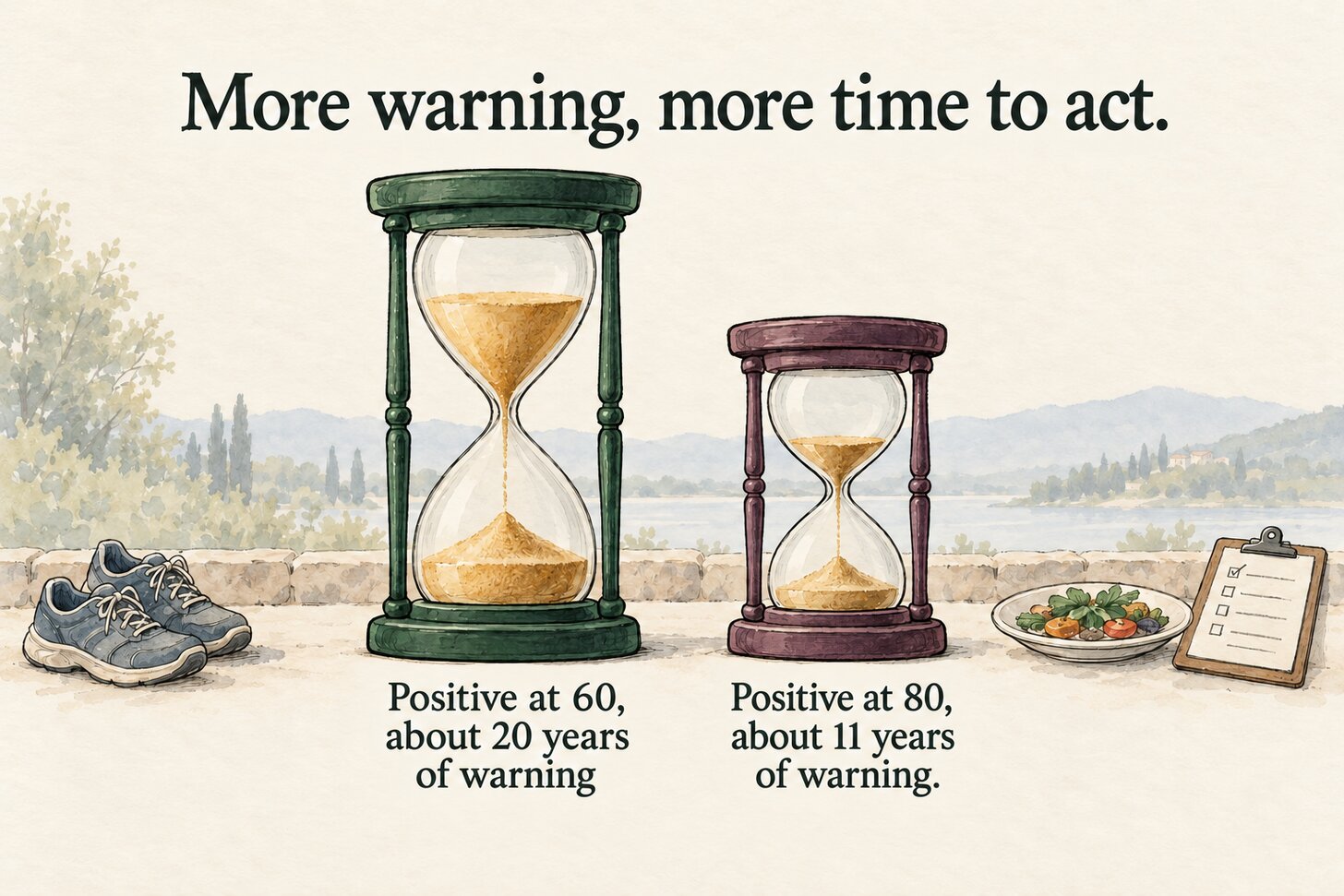
- Image models
- Charts and diagrams drawn in code
- Free or low-cost stock, like Wikimedia Commons
The stack
Everything it runs on, for the curious.
The Bench
- Next.js 16: App Router and server actions, with React 19
- Vercel: hosting and deploys
- GitHub’s API: as the save layer: each edit is a commit, and Vercel rebuilds
- Sign-in: a password plus an authenticator code; if anything is missing, it stays locked
- marked and js-yaml: for Markdown and frontmatter
Content and memory
- Markdown in Git: the single source of truth
- Obsidian: the research vault: one linked Node per study, trial or idea
- GitHub: code, history, issues and notifications
AI
- Claude and Claude Code: drafting, the editing passes, coordinating the work, and building the software itself
- OpenRouter: a model switchboard: one file picks the model for each job, like Grok to search X, GPT for careful sourcing and Gemini to watch YouTube
- An image maker: that keeps every picture’s prompt and model on record
Automation
- GitHub Actions: the Scouts run every Friday and commit their reports
- Scheduled tasks: in the Claude desktop app file new research twice a week
- Node.js scripts: for intake, de-duplication, checks and the weekly Lineup
- YouTube Data API: for the video Scout
- Alerts: by macOS, email and Telegram
This site
- Vite and React: pages built from the vault on every deploy
- sharp and self-hosted fonts: small, fast pages
- Vercel Web Analytics: visits, without cookies
Distribution
- Substack: the newsletter, email delivery and Notes
- Spaceship: DNS for alzamateurs.com